

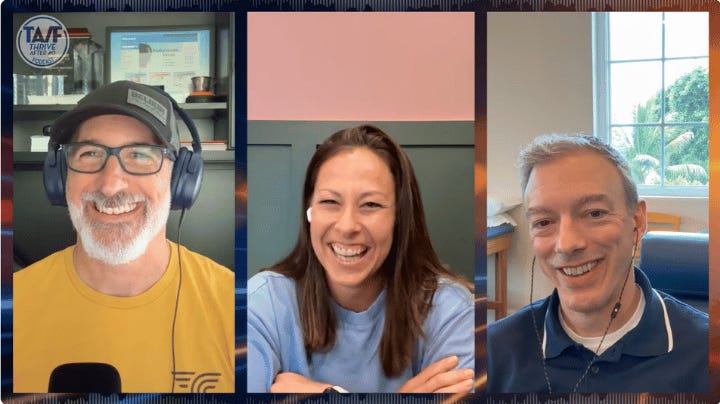
In case you missed it - SEASON TWO of the Thrive A/F Podcast kicked off with our first-ever guest, and honestly, we couldn’t have picked a better one. Emily Bridgers Benson is a co-owner and managing partner at CrossFit Terminus here in Atlanta, a former UGA gymnast, a six-time CrossFit Games competitor, and — back in 2014 — the sixth fittest woman in the world.
She’s also our first female guest, which, ten episodes into a podcast about training and longevity, felt overdue, and turned out to shape a lot of what we talked about. Mostly, though, she’s just a friend I’ve trained next to for years, which made this conversation feel less like an interview and more like the kind of talk we’d have anyway, just with microphones on.
We covered a lot of ground but three things stuck with me enough that I want to highlight them here.
The intimidation factor is real, and it’s fixable
Emily’s been doing CrossFit since 2010, back when she’d have to explain to people what it even was. She watched it go from a “niche, hardcore misfits” scene to something much bigger, and along the way she and her husband Ben got intentional about a specific problem: how do you make this less intimidating without watering it down?
Her answer stuck with me:
“You don’t have to do handstand pushups to improve your overhead shoulder stability... there are other ways to work on this skill that’s not going to put you at risk.”
That’s the whole philosophy in one line. You don’t need the highlight-reel movements to get the benefit. You need a coach who can scale the skill to where you actually are, and the mindset to believe that it’s never too late to try new things. This is something Lou and I have been talking about on Thrive A/F since episode one.
Strength training might be the most underrated entry point in the room — especially for women
I asked Emily point blank: is CrossFit a good on-ramp for someone with zero strength training background? Her answer was more emphatic than I expected:
“CrossFit is one of the best ways that people can be introduced to strength training... the instruction that you get with technique, if you’re at a good gym, is pretty unmatched.”
She told me about members who’ve moved away and set up garage gyms rather than find a new box, because “we didn’t find a gym that felt as good.” That’s not a marketing line. That’s what actual retention looks like when the coaching does its job.
Since Emily’s our first female guest, I wanted her take specifically on what she’s seen from women around strength training — and her answer connected two things I hadn’t put together before: the clients she’s working with right now, and the cultural shift she’s watched happen over her whole career.
“I’m currently personal training a handful of people that are on GLP-1s... I’ve definitely recommended that they continue strength training while they’re on it. There’s certain people that have seen huge benefits with blood work and all kinds of things.”
And on the bigger picture:
“I feel like when I was in my 20s and even my early 30s, women would kind of look at me doing this really heavy strength training and be like, that’s crazy... But now people are, you know, between 35 and a little over 40, they’re like, what are you doing for strength training? I need to be doing something.”
That’s not a small shift. That’s a whole generation of women going from “why would you do that” to “teach me how.” We’ve shared examples on our podcast and in these articles about strong women doing amazing things, and it was great to get Emily’s firsthand perspective to add to the story.
Lou brought the science side of this home. Starting in your mid-30s, you lose muscle every year you don’t actively fight it — sarcopenia, if you want the clinical term. And it’s not just about looking strong:
“Muscle is the best padding to keep you from fracturing a hip or some kind of fracture that may end you up in the hospital and turn into a real disaster.”
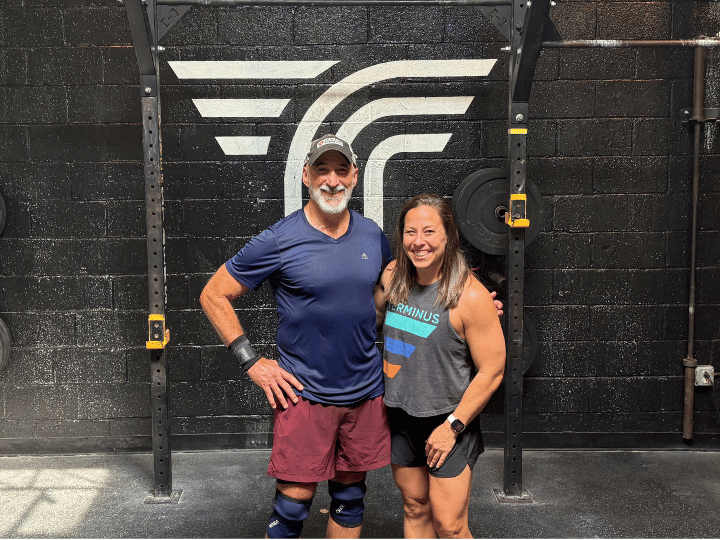
Recovery isn’t one-size-fits-all — and it changes with you
The importance of recovery is something we talk about a lot, and Emily was refreshingly honest about what elite-level recovery actually looked like during her competing years — massage every two weeks, PT every two weeks, a red light therapy unit she’d use between events at competitions. Cutting-edge stuff, and also, by her own admission, not sustainable or even healthy long-term:
“I was not very well. I had a lot of anxiety. I would have panic attacks because I think my central nervous system was just always on high alert.”
Now, recovery looks completely different — no more training twice a day with a nap in between, more listening to her body, more actual sleep (well, as much as any of us get anymore). It’s a good reminder that “optimal recovery” isn’t a fixed target. It moves with your life stage, and that’s not a failure, that’s the point.
One practical tip I’m stealing from her: she brings a mobile DEXA scan truck to Terminus two or three times a year, giving members real data on lean mass, fat mass, and bone density instead of guessing. It’s a habit I’d love to see more people adopt early (I’ve done it once), especially given how often osteoporosis risk gets treated as a “someday” problem instead of something worth a baseline number now.
This is the short version. The full conversation runs almost an hour and gets into a lot more including nutrition, raising active kids, and a rapid-fire round that includes Emily’s take on pickleball versus tennis (spoiler: she tried to walk back her answer and we did not let her). Full episode is live now, so go check it out!
It was a great kickoff conversation to start Season Two of the podcast, and set a high bar for our next guest! And if you are enjoying the content and the podcast, please do us a favor and help spread the word.
Keith | Thrive A/F Team
🗨️ Join the Conversation: Emily talked about watching women go from being told heavy lifting was “crazy” to actively seeking it out in their late 30s and 40s. If that shift describes you, what changed your mind? Leave a comment and share your story.