

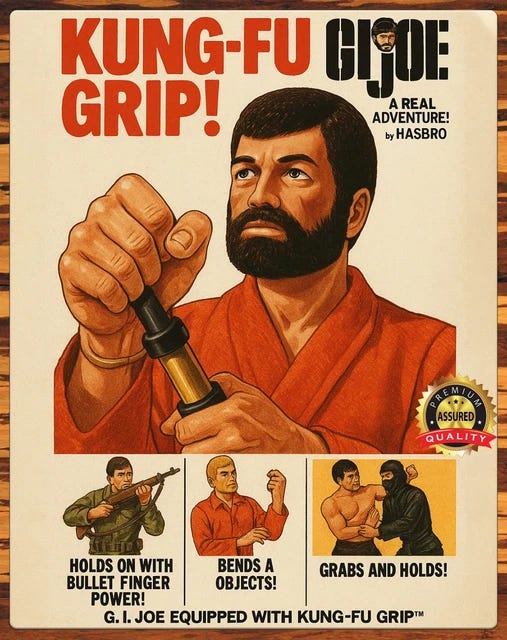
👊The Real-World Adventure (The “What”)
Most people would probably think of measuring things like cholesterol, blood pressure, or body fat percentage when assessing health. However, if you could choose a single test to help predict someone’s longevity, grip strength might be the winner.
The scientific evidence suggests that it is one of the best predictors of how long (and how well) we will live.
Why does grip strength matter?
It really isn’t about your hands. Rather, it’s about what your hands say about you.
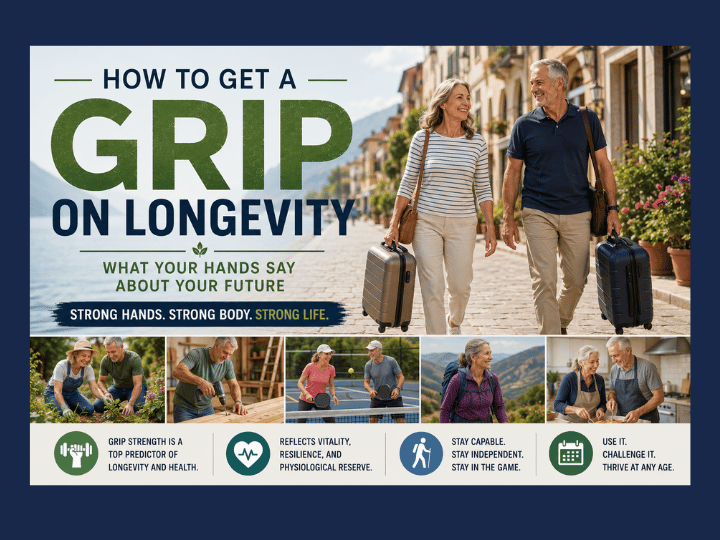
Think about some of the things we want to continue doing as we age. Carrying our own luggage through an airport. Lifting a grandchild. Working in the garden. Playing pickleball or tennis. Paddling a kayak. Tackling projects around the house. Traveling. Staying independent.
Those may seem like ordinary activities, but they represent something important: capability.
Grip strength provides a glimpse into that capability.
Researchers have found that grip strength is an excellent window into how resilient we are against illness, stress, injury, and the normal challenges of aging. They refer to this as physiological reserve.
For instance, grip strength provides a glimpse into overall vitality, strength, muscle mass, nutritional status, and inflammation levels.
In fact, research shows that the lower a person’s grip strength, the higher their risk of dying and the more likely they are to suffer from heart disease, stroke, respiratory disease, cancer, disability, frailty, and loss of independence.
One of the largest analyses ever conducted examined nearly 2 million people and found that individuals with stronger grip strength had a 31% lower risk of dying from any cause compared to those with weaker grip strength.
Additionally, another study involving more than 500,000 adults found that every 11-pound decrease in grip strength was associated with approximately a 16% to 20% increase in the risk of death.
💪The Behind-the-Scenes Prep (The “How”)
So should we all sit around squeezing a tennis ball or gripping device? No.
Grip strength is valuable because it is often the result of being active and using your body. That’s why it is such an important metric. For example, if someone has been less active for a while, their grip strength will often be one of the first things to decrease. In many ways, it acts like a canary in a coal mine by providing an early warning that physical capacity may be slipping. This is important because mortality risk begins to increase long before someone becomes dramatically weak.
It turns out the phrase “use it or lose it” really is true. If we stop challenging ourselves physically, we lose capacity. On the other hand (pun intended), the body can continue adapting to new demands at virtually any age.
Before beginning any exercise program, consult your physician and consider working with a qualified professional to ensure proper form and the right approach for you. With that said, here are some simple ways to build and maintain grip strength throughout life:
• Engaging regularly in manual physical activities involving the upper body
• For instance, gardening, handy-man projects, automobile restoration, and similar activities
• Racquet sports such as tennis and pickleball
• Strength training with kettlebells, dumbbells, and resistance exercises
• Pull-ups and hanging exercises
• Any activity that keeps you physically engaged with life
⚡The High-Thrive Moment
One of the reasons I love grip strength as a longevity metric is that it represents something much bigger than hand strength.
Strong people tend to remain capable.
Capable people tend to remain independent.
Independent people tend to stay engaged with the activities, relationships, adventures, and experiences that give life meaning.
In other words, they continue doing cool stuff.
That is why grip strength matters.
It is more than a measure of force. It is a reflection of function, resilience, and the encouraging fact that many aspects of aging remain within our control.
The goal isn’t simply stronger hands.
The goal is maintaining the physical capacity to keep showing up for life.
To keep traveling.
To keep exploring.
To keep playing.
To keep helping.
To keep thriving.
Join the Conversation:
Describe a time when you were grateful for your grip strength. Maybe it was carrying luggage through an airport, lifting a grandchild, working in the garden, paddling a kayak, playing pickleball, or tackling a project around the house.
Leave a comment and share your story. We’d love to hear what “staying capable” looks like in your life.
Lou - Thrive A/F Team