
In Part 1 of this series, we explored how fatigue does not always mean we are completely spent. Sometimes we have more in the tank. But just because we can push through fatigue, does that mean we always should? Absolutely not.
Recovery is often treated as time away from training. But recovery is not what happens instead of training. Recovery is part of the training.
Training provides the stimulus. Recovery allows your body to repair, rebuild, and adapt. Without enough of it, performance and motivation may decline, sleep may suffer, and small aches may grow. More training does not always create more progress. In fact, sometimes it simply creates more fatigue.
Recovery Is Not the Same as Doing Nothing
Sometimes complete rest is exactly what you need. However, recovery can also be active: walking, easy cycling, mobility work, relaxed swimming, or lighter technical practice.
For a Brazilian Jiu Jitsu practitioner, that might mean drilling instead of fighting for your life during every round. For a runner, it might mean walking or an easy run instead of intervals. The goal is to move without creating significant additional fatigue. If a recovery workout leaves you tired, it was just another workout.
Your Body Keeps a Running Total
Travel, emotional stress, illness, poor nutrition, dehydration, alcohol, demanding work, and disrupted sleep all affect recovery. Think of yourself as having a recovery budget. Training spends some of it, but so does life. Temporarily adjusting your training is not abandoning your goals, it’s responding intelligently enough to keep pursuing them.
What Changes After 40
People over 40 can become stronger, improve endurance, learn difficult skills, compete, and take on new challenges, but many of us cannot repeatedly abuse our bodies and recover as easily as we once did.
That does not necessarily mean less intensity. It may mean applying it more judiciously. A well conditioned 55 year old may tolerate more than a sedentary 30 year old who goes “hog wild.” Health, experience, sleep, nutrition, injury history, and life stress matter. Age gets a strong vote, but not the only vote.
How Do You Know When You Need More Recovery
Wearable devices are useful tools, NOT unquestionable authorities. Pay attention to the technology AND the human being wearing it.
Possible signs include declining performance, unusual fatigue, prolonged soreness, irritability, lost motivation, disrupted sleep, an elevated resting heart rate, feeling uncoordinated, repeated illness, increasing pain, familiar workouts feeling harder, or feeling “wired but tired.” One bad day does not necessarily mean you are under recovered. Look for a pattern.
The Foundations of Recovery
Recovery can become unnecessarily complicated. Devices, supplements, treatments, and biohacks may help, and I use several recovery technologies myself and in my practice. But they CANNOT compensate for neglecting the basics.
Sleep supports physical repair, nervous system recovery, immune function, and emotional regulation. Nutrition provides energy and rebuilding materials. Hydration matters, especially in South Florida heat and humidity. Appropriate movement can reduce stiffness. Emotional stress also affects recovery, so quiet time, enjoyable activities, meaningful relationships, and stepping away from work matter.
Planned Recovery Beats Forced Recovery
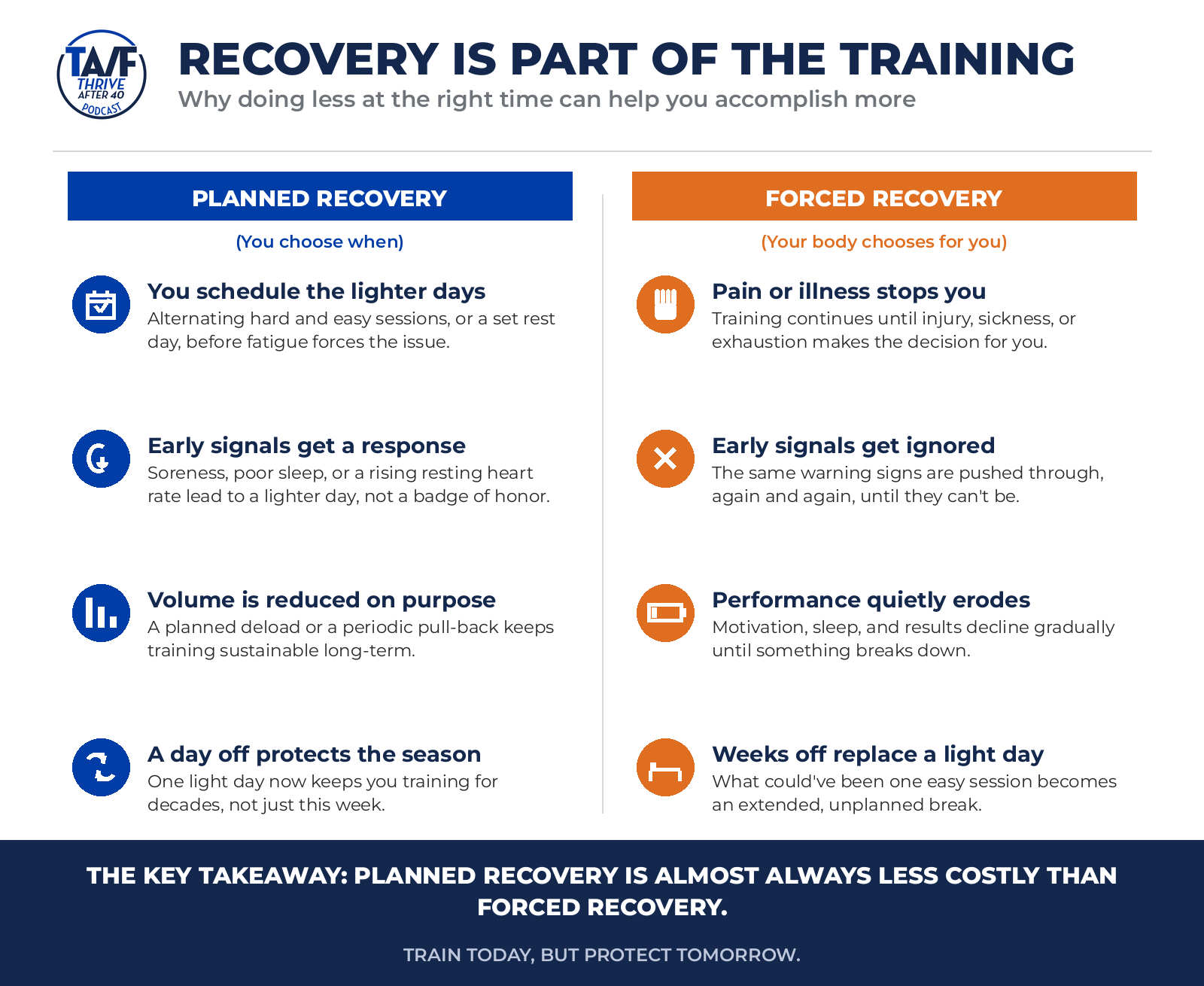
Many people train until pain, illness, exhaustion, or declining performance forces them to stop. Consequently, what could have been a lighter day may become weeks away from the activity they love. Planned recovery is usually less costly than forced recovery. It may mean alternating hard and light sessions, taking a rest day, or periodically reducing training volume.
When I returned to Brazilian Jiu Jitsu at 56 after an eight year layoff, much to my surprise, I retained much of my knowledge. But knowing what to do and being physically prepared to repeat it are not the same. So, I had to rebuild slowly and train for who I was at that moment, not who I remembered being eight years earlier.
Train Today but Protect Tomorrow
In Part 1, I asked whether the voice saying “you are done” was always correct. However, in Part 2 the question becomes: Even if I can do more today, what will that effort cost me tomorrow? Humans need challenges, but today’s decision should support the larger goal.
Recovery is individual. Ask how you feel compared with normal, whether performance is improving or declining, how well you slept, and what other stress you are managing. Sometimes fatigue can be challenged, but oftentimes it’s useful information, and/or a warning.
As I discussed in Part 1, consult your physician or physical therapist before starting a new exercise routine or significantly increasing an existing one. Persistent unexplained fatigue, declining exercise tolerance, chest pain, unusual shortness of breath, dizziness, fainting, an irregular heartbeat, sudden weakness, or sharp and escalating pain deserve medical attention.
We do not recover because we are weak. We recover so stress becomes adaptation and improvement rather than accumulating damage. Push when it is time to push, but recover when it is time to recover so you can return ready to push again.
Thriving after 40 is not about winning one workout. It is about staying healthy, capable, and in the game for decades to come.
Train today, but protect tomorrow!
🗨️ Join the Conversation
Do you find it harder to push yourself or to recover? Have you ever ignored recovery and been forced to stop, or found that backing off helped you return stronger? Leave a comment and tell us how you balance working hard with protecting what you love.
Lou | Thrive A/F Team